

Stranger’s Guide explores how politics, power and culture shape daily life across the globe. We believe that local writers, journalists and thinkers are best equipped to explain their political and cultural realities and we publish stories that ask us to listen to the complexities of the world.
Weekly Long Read is for everyone but it’s made possible by our paid subscribers. Thanks to those who support our work, and if you’re not yet a paid subscriber, today is the perfect day to join!
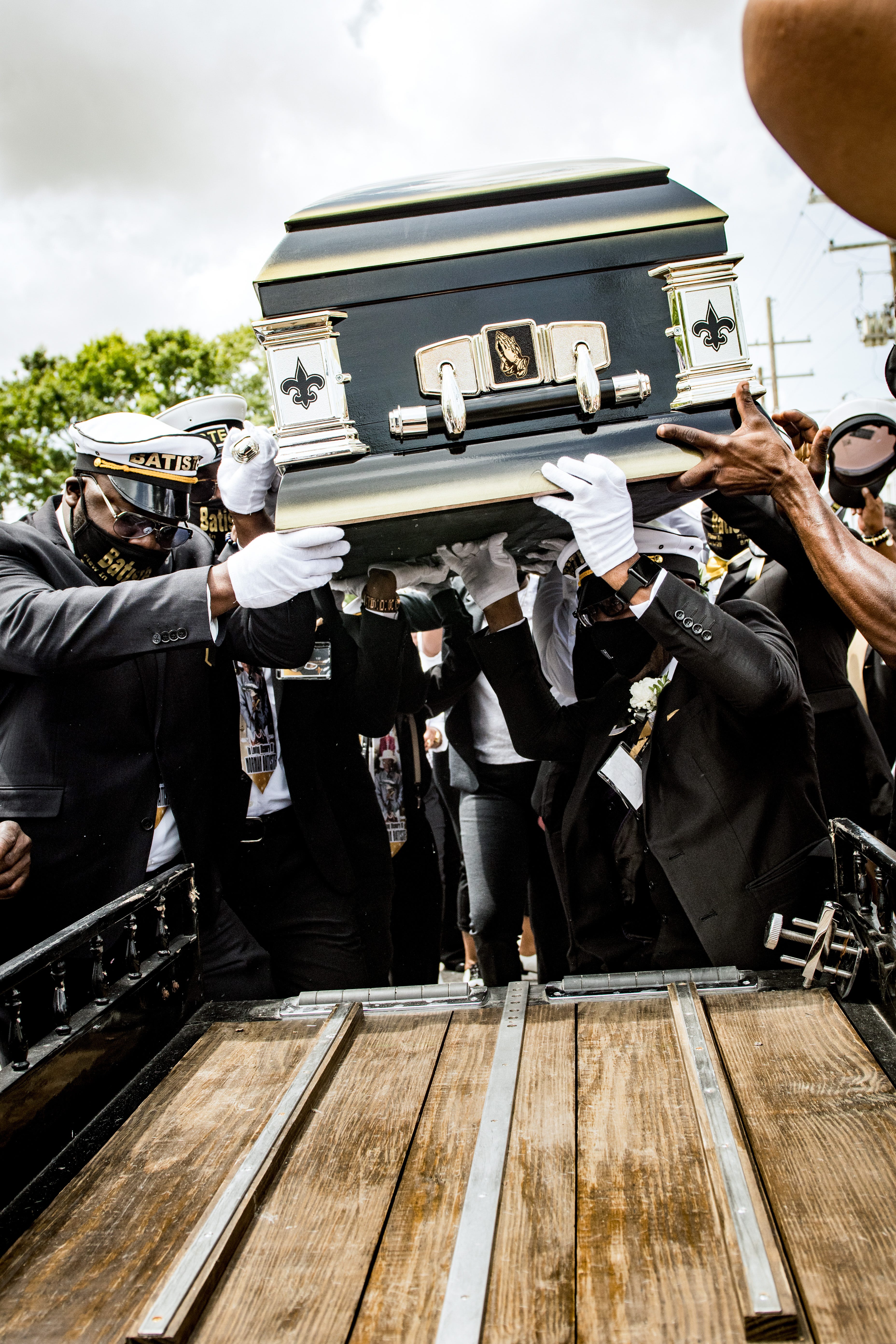
Blow, Man, Blow
by Gwen Thompkins
Stranger’s Guide: New Orleans
On April 22, 1959, an elderly Black woman, a former housemaid, sat down with two white men at a friend’s place in New Orleans for a long chat. Never mind that they were breaking state mixing laws, which made most socializing across the color line illegal. Had she been their servant, it would have been okay. But she wasn’t. When the men turned on their tape recorder, she said in a strong voice:
I’m Stella Oliver, the widow of King Joe Oliver. We married in 1912, July the 13th. He was a fine man, a fine husband and a fine musician. We got along beautifully together. We traveled around, had our ups and downs together, but we still stuck. And I’m happy to say this morning that I’m glad to say a few words about Joe. He’s dead now. Nearly 18 years. He died (in) ’38. And I miss him up ’til now. However, his name has lived in the public. He was a great musician and a great man. Everybody loved him. And I still love him, too.
She then described the cornet and trumpet player so central to the story of jazz worldwide as a wife would, sharing details that informed the great musical traditions of New Orleans, including the city’s funeral parades. Of the many rituals of New Orleans, perhaps none captures the spirit of its people more profoundly than the brass band chorus leading them from this world to the next. Oliver didn’t invent the jazz funeral, but he found his voice on those long parade routes, setting in motion much of what jazz would become.
Some of his story the world already knew. The men interviewing Stella were making the recording for what was then the Hogan Jazz Archive at Tulane University, a collection that was built, in part, on the legacy of King Oliver’s musical significance. Oliver, who’d opened the 20th century in New Orleans as a teenaged yard boy-turned-butler-turned-musician, and later starred in the Magnolia and Onward brass bands, is said to have blown down every cornet king in the red light district, a.k.a “The District,” a.k.a. Storyville. He was a favorite on other New Orleans streets, as well, before lighting up Chicago in 1918 and then 1922 with dream bands plucked mostly from home—Johnny St. Cyr on banjo, Bill Johnson on bass, Honoré Dutrey or Kid Ory on trombone, Louis Armstrong on second cornet, the Dodds brothers on drums and clarinet. Each player brought something shiny to the whole, but, as any jazz musician knows, the first cornet (or trumpet) always leads the band. Oliver was a big man, and he stomped New Orleans into the pilings of the many mansions of jazz, one song after another, with his great big foot: “Dippermouth Blues,” “Sweet Like This,” “St. James Infirmary,” “Canal Street Blues,” “Dr. Jazz,” “Mabel’s Dream,” “Alligator Hop,” “Chimes Blues,” “Shake It and Break It,” “Wa Wa Wa.” Black and white musicians mimicked his style on bandstands everywhere—not just the power, but also the tenderness, the fragility. Oliver’s groundbreaking use of plungers and mutes added new dimensions to the music. He could make his horn laugh. But he could also make it whinge. Or moan. Or weep.
Stella knew all about that. She also knew about experiences that made the outsized Oliver an artist with plenty to say. Born upriver from New Orleans in 1885, Joe had been in short pants when his father, a Baptist minister, died. Stella said his mother brought him to the city to make a new start but died soon after, leaving him an orphan. Taken in by a Jewish family near Magazine and Second streets, he lived on the premises, with privileges to come and go as he pleased as long as the garden was tidy. When there was no girl next door, he married the one around the corner—two houses down. He told her about “raising himself ” from a young age. About washing out on the trombone. About the time he lost sight permanently in his left eye. About how difficult it was for an honest man to make a living in a city riddled with vice. And, perhaps most interestingly for music fans, he told her about not being fond of playing dirges at New Orleans funeral parades, the saddest songs at the saddest tempos, accompanying the dead on the saddest stretch of the route. “But he’d have a great time coming back” from the cemetery, Stella said. “I’m telling you, that man could blow.”
In New Orleans, live bands have been escorting the dead to eternal rest since the end of the Civil War. That’s when a flood of musical instruments from various military bands filled the pawn shops, making it easier for locals to not only learn to play, but to find new uses for music in public life. And while Black as well as white bands accompanied funerals for years, the tradition has endured among Black residents. Long denied burial insurance by white-owned companies, generations of Black New Orleanians raised money and financed their own funeral traditions through a hodgepodge of homegrown benevolent societies later known as social aid and pleasure clubs. A few cents a week, a quarter, a dollar, or more could pay for a kind of consideration in death that few experienced in life. Locals called their tradition “putting away” a member of their community before the processions became known as “jazz funerals.” And without the income those parades generated, elite musicians like Joe Oliver would not have been able to keep performing, to keep improving, and to keep cooking the music until it was hot. Oliver performing on the street made others begin to recognize him as the artist he was. It’s doubtful that anyone other than he could have enticed Armstrong to leave New Orleans for Chicago and subsequently imprint jazz onto the world. Nor might Duke Ellington have found the wah wah sound he needed to establish his fresh, new jungle style in New York. A funny man by all accounts, Oliver took his playing seriously. During funeral parades, he reportedly marched at times on city sidewalks, apart from his bandmates in the streets. That way, he could avoid stumbling into a pothole while blowing—and potentially breaking a note.
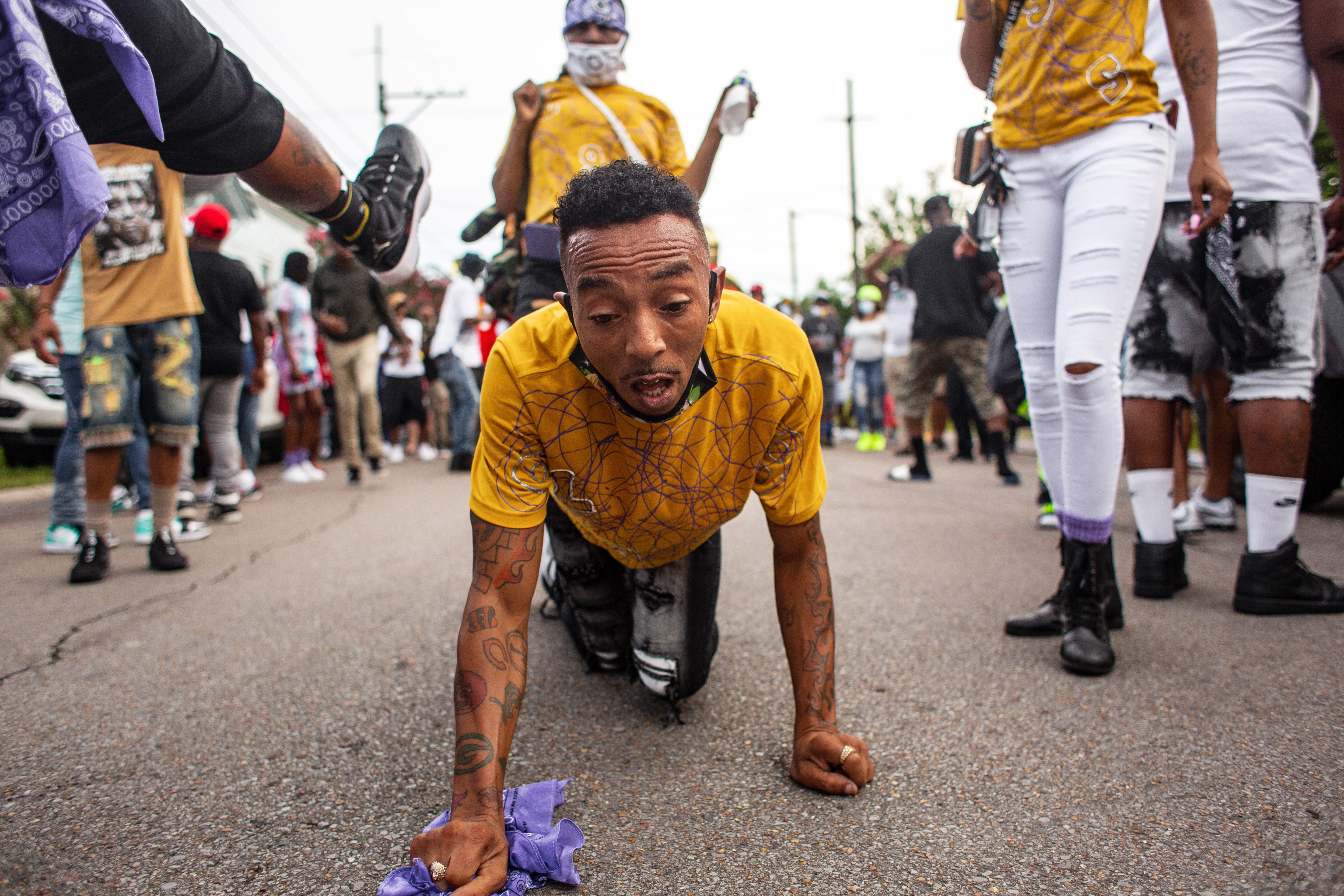
Within the dramatic arts, there are formulas for tragedy. In ancient Greece, the playwright Sophocles doomed Oedipus Rex in roughly five parts, beginning with a prologue and ending with a final exodus. Shakespeare dispatched with King Lear in five acts, just as he did with Othello, Macbeth and so many others. In Oliver’s time, New Orleans funeral parades took six acts or more, beginning with the band(s) escorting the body from home to the funeral and onward, then later returning to the bereaved family’s home to eat and play a little while longer. But nowadays, if the cemetery is near, locals can get the job done in five:
One: Someone has to die, which tourists often have a hard time remembering when they ask to see a funeral parade.
Two: There must be a ceremony honoring the deceased, preferably a wake and a service of some kind.
Three: The family and friends of the deceased accompany the casket to the cemetery at the beginning of a cortege, including a police escort and a brass band or bands playing a variety of hymns. Songs like “The Old Rugged Cross,” “Flee as a Bird,” and “Nearer My God To Thee” are rendered solemnly, as dirges, in a rhythm as slow and draggy as you please, through the streets of the city. This is the part of the parade that King Oliver did NOT enjoy.
Four: On the outskirts of the cemetery, the band goes quiet while the family, clergy and friends say their final farewells, i.e., “cut the body loose.” As the trumpet player Henry “Red” Allen recalled, “the band would stand in the road and wait until the moans and the cries went up, which meant that the preacher was saying ‘Ashes to ashes, dust to dust’ and throwing the dirt on the coffin. Then the drums rolled like thunder.”
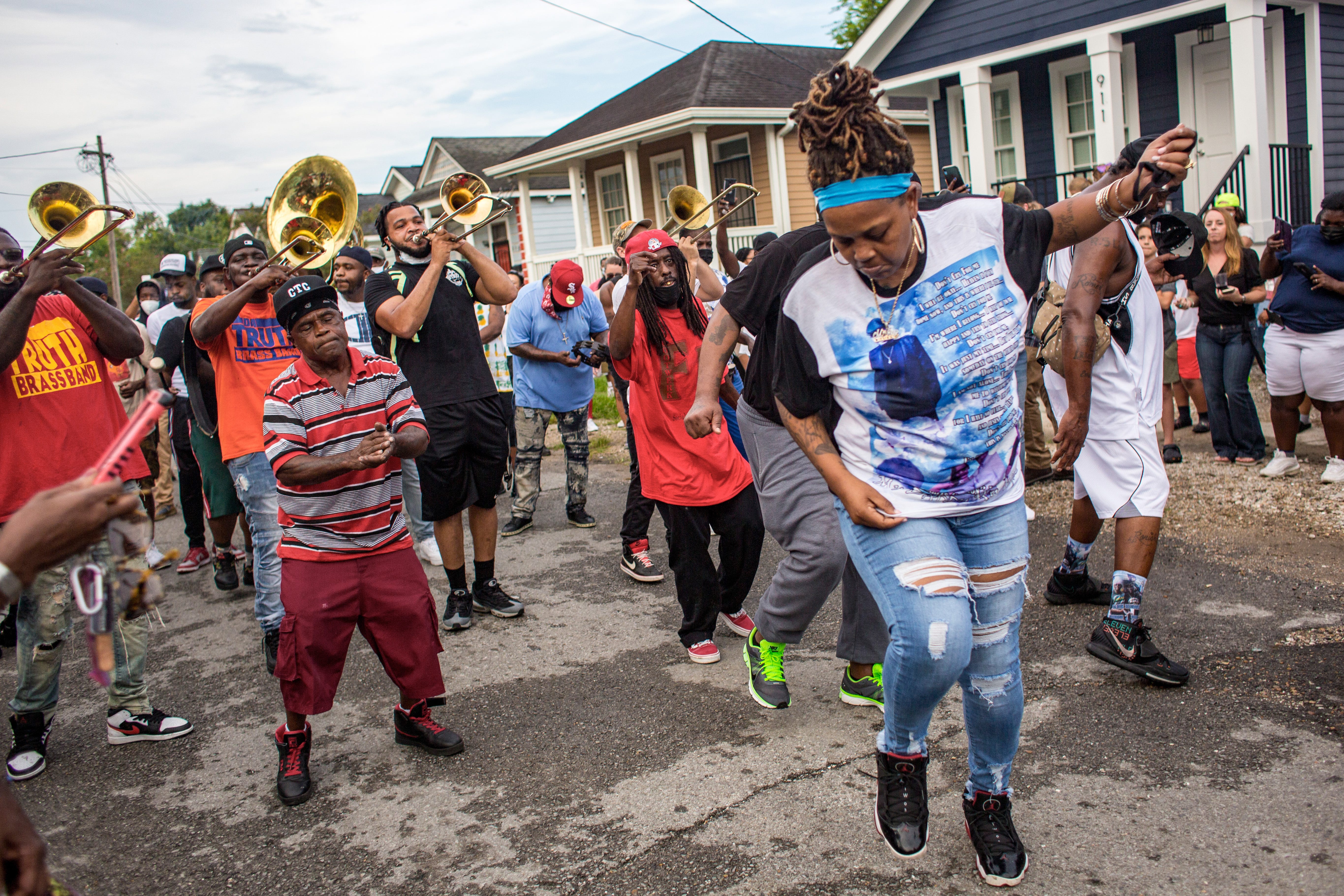
Five: Turning away from the cemetery, the band strikes up a series of happy songs while accompanying the funeral participants and the social aid and pleasure club members who’ve collected money over the years to make the funeral possible. Together, they make up the first line of the parade. They are followed by a second line of friends and strangers who dance, often buck-jumping, along the streets and sidewalks. The priority then is to celebrate the life of the departed, as well as that person’s newly found freedom from the burdens of the world. The revelers also are celebrating their own lives, with the understanding that they, too, will be cut loose at the cemetery one day. That’s why the musicians play bright numbers like “Didn’t He Ramble” and “Down By the Riverside.” And, at some point, the people will sing:
By and by, when the morning comes,
All the saints of God is gathering home
We’ll tell the story how we’ll overcome
We will understand it better by and by
An old-school traditional jazz funeral is an awesome sight, depicting a community in grief and triumph over the sins of the world. Anyone who has experienced it never forgets:
“The bass drummer pounded a somber cadence: Boom … Boom … Ba-DOOM!” clarinet player and author Tom Sancton wrote in his memoir Song for My Fathers. He’d been to the 1954 funeral parade for bandleader Oscar “Papa” Celestin.
“Then the horns and the woodwinds went up just like these golden, swirling colors, reaching up,” the documentarian and author Jason Berry said on the public radio show, Music Inside Out. He was describing the 1973 funeral parade for Preservation Hall’s DeDe Pierce.
“The musicians swayed like elephants as they marched, leaning first to one side, then to the other,” Sancton continued. “Trailing behind the bands, five thousand men, women and children formed the second line of this unwieldy procession …”
“I just stood there riveted by it,” Berry said.
“The dirge music had calmed them,” Sancton remembered. “But it was clear … that the second liners were waiting to cut loose and dance to the hot music that would erupt once Papa was in the ground.”
“And then, when they hit ‘Didn’t He Ramble,’ ... I had never seen anything like it,” Berry said. “It was one of the most beautiful moments of my life.”
“That was the New Orleans way,” Sancton wrote.
“These funerals went according to the Bible,” said trumpet player Henry “Red” Allen. “Sadness at birth and rejoicing at death.” Their momentum also bends toward catharsis, defined by the ancient Greeks as an emotional purging that, in the face of tragedy, uplifts the human spirit. In blowing horns, or beating drums, or dancing, or waving handkerchiefs and singing loudly, those who participate in a jazz funeral are not only bearing witness to the terrifying spectacle of death, they are freeing themselves from the flood of feeling that attends death.
And yet, not every musician feels the same way about the look and sound of jazz funerals—the music, the clothes, the politics. Armstrong, for example, embraced the full pageant of emotion in the brass band funereal repertoire. (“You really have a bunch of musicians playing from the heart,” he said.) But Oliver, apparently, did not.
PICK UP THE PACE
“He didn’t like dirges,” Stella says on the tape. But “Joe was always crazy about the hymns … He would take some of those church songs … and he would fix it up.” Just as he did with work songs and railroad songs. New Orleans brass bands have been turning sad music hot for as long as anyone can remember, and Oliver apparently sizzled his share. “When the Saints Go Marching In,” for instance, began as a dirge on the streets of the city. But after the old New Orleans brass bands swung it and Armstrong made his famous 1938 recording, “The Saints” became a rollicking anthem, as well as inspiration for an NFL franchise.
In reimagining hymns and pacing up dirges, Oliver may have been distancing himself from the weight of tragedy. Perhaps he’d had enough. Unlike Armstrong—the phenom—whom he and Stella had showered with attention, Oliver had no parents, no mentor, no formal schooling, no financial safety net, no business acumen and, owing to a love of sugar water and sugar sandwiches, eventually no teeth. Armstrong said “Papa Joe” had lost much of his strength blowing the horn as early as 1923. By 1935, his playing days were done.
HATS OFF
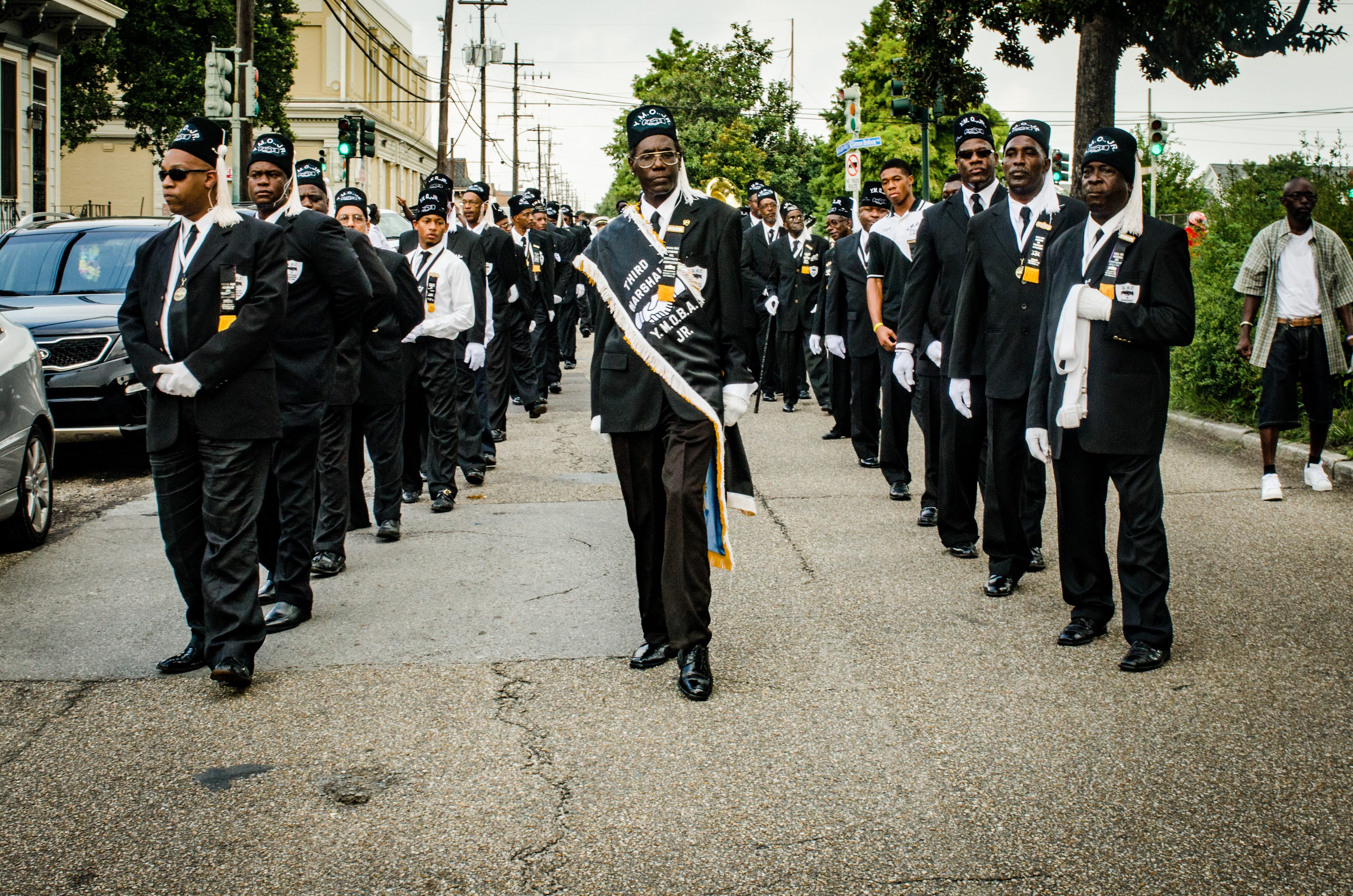
Musicians disagree—just like everybody else. And there’s no telling how Oliver would have landed on the matter of uniforms at funeral parades. On the streets, he and his contemporaries wore coats and shirts of cream and blue, blue and white, but most often black and white, with their shirts and trousers ironed and their shoes buffed. They also wore some form of hat—black for funerals and white for other events. The tradition has continued for more than a century and, for some, continues still. But in recent decades, brass band players in New Orleans have differed over whether their clothes should be as hot as their music. What traditionalists view as a source of pride—a disciplined brass band looking sharp, professional and playing in tune—others now resist.
Practically speaking, milkman’s hats, jackets and starched trousers in the subtropics can be a misery for a musician outdoors, and in New Orleans, it is almost always summer. Even Oliver, more than a century ago, would drape a handkerchief over the back of his neck to avoid the sun. Stella used to follow him on the parade route, often for miles, feeding him boiled eggs for strength.
Beginning in the 1970s, young musicians in the Hurricane and the Dirty Dozen Brass Bands began to wear T-shirts and sneakers on the parade route. By the time the Grammy award-winning Rebirth Brass Band got going in the 1980s with their anthem “Do Whatcha Wanna,” the traditionalists were a minority.
ON MIXING AND MATCHING
Hats and uniforms also may have lost their allure among young Black musicians who see themselves as representing a more modern social consciousness. Race has always mattered in music, and for a long time New Orleans, musicians had to be especially cautious about how they comported themselves if they wished to remain unmolested in the city. That’s because Louisiana did not abide racial mixing for most of the 20th century, despite the fact that music, by its very nature, mingles. A general climate of police harassment helped push Oliver out of New Orleans after World War I, and anti-mixing laws once kept Armstrong and his integrated All-Stars out of the city for a nine-year stretch. Even after the 1954 US Supreme Court decision banning segregation, Black and white musicians often struggled to perform together in public. In those days, the uniforms that Black brass bands traditionally wore likely assured segregationist authorities that the wearers were not socializing with white audiences as equals. People still remember how the laws then could be interpreted as broadly or as narrowly as an individual police officer saw fit. “Blacks and whites could be together in Preservation Hall,” Sancton, the white clarinet player and author, told Music Inside Out. “The band could be Black ‘cause, let’s face it, they were hired help. But mixing, in any social way, in any personal human way, was technically against the laws. All of that ended with the Civil Rights Act of 1964. But my experience with this started in 1962. So for two years, every time I went to (Black clarinet player) George Lewis’ house, or he came to our house, we’d sneak.”
And yet, uniforms are not necessarily about race. New Orleans-born jazz raconteur and rhythm guitarist Danny Barker (1909–1994) preferred the optics of his youth—when brass bands looked resplendent as distinct and cohesive entities and played the dirges and other songs in their traditional order. Some of those players, like Oliver, were his heroes and mentors, whose greatness had almost nothing to do with what white people thought of them. As self-made artists, they were incandescent. In 1970, he created the Fairview Baptist Christian Church Marching Band—an inspired collection of Black boys and men from ages 8 to 18 that rekindled youthful interest in brass band music. Barker, a Black man from a large musical family, told Fairview members first-hand about the New Orleans pantheon of musical greats, many of whom he’d followed in the second lines across the city. He also shared his experiences performing with the likes of Cab Calloway and Armstrong, Charlie Parker and Billie Holiday. As a mentor, he reminded the young players of their musical birthright as sons of a city unlike any other in the world. Whatever he said worked. Many of the Fairview members have enjoyed long professional careers in jazz and other forms of popular music.
Without the Fairview, which disbanded in the 1980s, there likely would be no Hurricane, Dirty Dozen or Rebirth brass bands, nor the many constellations of bands that followed. And yet, before Barker died in 1994, he asked that there not be a jazz funeral for him. To his mind, they’d gotten too casual, too crass. The musicians were dressed indistinguishably from anyone else on the street. The second lines of well-wishers were flooding the first lines of mourners. People were dancing on rooftops and pouring alcohol on caskets. Most importantly, the musical repertoires had changed. Some bands, electing to soften the blow of death, had eliminated the dirges altogether. They headed to the cemeteries playing contemporary R&B and hip hop-influenced songs. Reverence appeared to have become old hat. Only when former members of the Fairview persuaded Barker’s family that they could organize an event he’d be proud of, did his jazz funeral proceed.
Oliver never got a traditional jazz funeral. After leaving New Orleans in 1918, he didn’t go back. Ever. Stella said that was a mistake, especially when pyorrhea and other reversals stopped him from playing music. She said she was living in New York City during those final months, when he was stranded in Savannah, GA selling fruits and vegetables on the street and then tending a local pool hall. It was not an end that anyone could have predicted for a man whose triumphs and troubles furthered the reach of New Orleans jazz in such profound and wonderful ways. After he brought Armstrong up from New Orleans to Chicago in 1922, Armstrong made his first recordings with Oliver’s Creole Jazz Band, which helped catapult the young genius to fame. And Oliver’s decision to turn down the Cotton Club in New York City in 1927 made way for a young Duke Ellington to take the job and begin his rise in the annals of music. Ellington nursed a life-long love for the sounds of New Orleans. He hired a slew of New Orleans musicians for his orchestra, including bassist Wellman Braud and clarinet player Barney Bigard. Even his first muse on trumpet had spent a week watching Oliver up close in Chicago and adapted his style to mimic that of the “King.”
In April, 1938, the Negro Actors Guild of America reportedly paid for Oliver’s body to be transported from Georgia to New York’s Grand Central Station. Armstrong met the train. Then, he accompanied “Papa Joe” to services in Harlem. “Most of the musicians turned out,” Armstrong later said. “The people who really knew him didn’t forget him. It would have been nice if they’d had a parade for him, but instead they took him into the chapel across from the Lafayette—that big rehearsal hall in Harlem.”
Armstrong, who attributed Oliver’s decline to physical maladies, poor business skills and an unwillingness to adapt his playing style to the changing times, nevertheless understood the enormity of his contribution to the world. “He started all of us youngsters off,” he is said to have told the mourners at the chapel. “There isn’t a riff played today that he didn’t play 15 years ago.”
And, yes, Louis played a dirge for Joe.
Armstrong talked about Oliver until the day he died. So did other musicians, whether or not they knew him personally. An internet search today reveals a long list of books and articles that mention Oliver, his best known songs, and the sweet polyphony of his Creole Jazz Band. But while everyone else describes a giant, Stella Oliver describes a man worth having. Her 1959 oral history in New Orleans may be the only record of her experiences in life, and she didn’t mind giving most of her time to her husband who’d been dead 18 years. “He was a grand fellow to know,” she said. After the interview ended, she slipped out of history without any fanfare at all.
GWEN THOMPKINS is the executive producer and host of a New Orleans-based public radio program, Music Inside Out. Currently, she’s writing a book on the Music Inside Out interviews to be published by the University of North Carolina Chapel Hill Press.
What a great and moving piece of journalism. One of those bits of history and culture you think you know about, and find there is a lot more - history and flavor. To go deeper, there is a great book by a man named Robert Harwood called "I Went Down to St. James Infirmary" This great essay makes me want to get myself back to New Orleans. It's been too long! Thank you