

Stranger’s Guide explores how politics, power and culture shape daily life across the globe. We believe that local writers, journalists and thinkers are best equipped to explain their political and cultural realities and we publish stories that ask us to listen to the complexities of the world.
Weekly Long Read is for everyone but it’s made possible by our paid subscribers. Thanks to those who support our work, and if you’re not yet a paid subscriber, today is the perfect day to join!
Heinemann’s Curse
by Nathaniel Rich
Stranger’s Guide: New Orleans
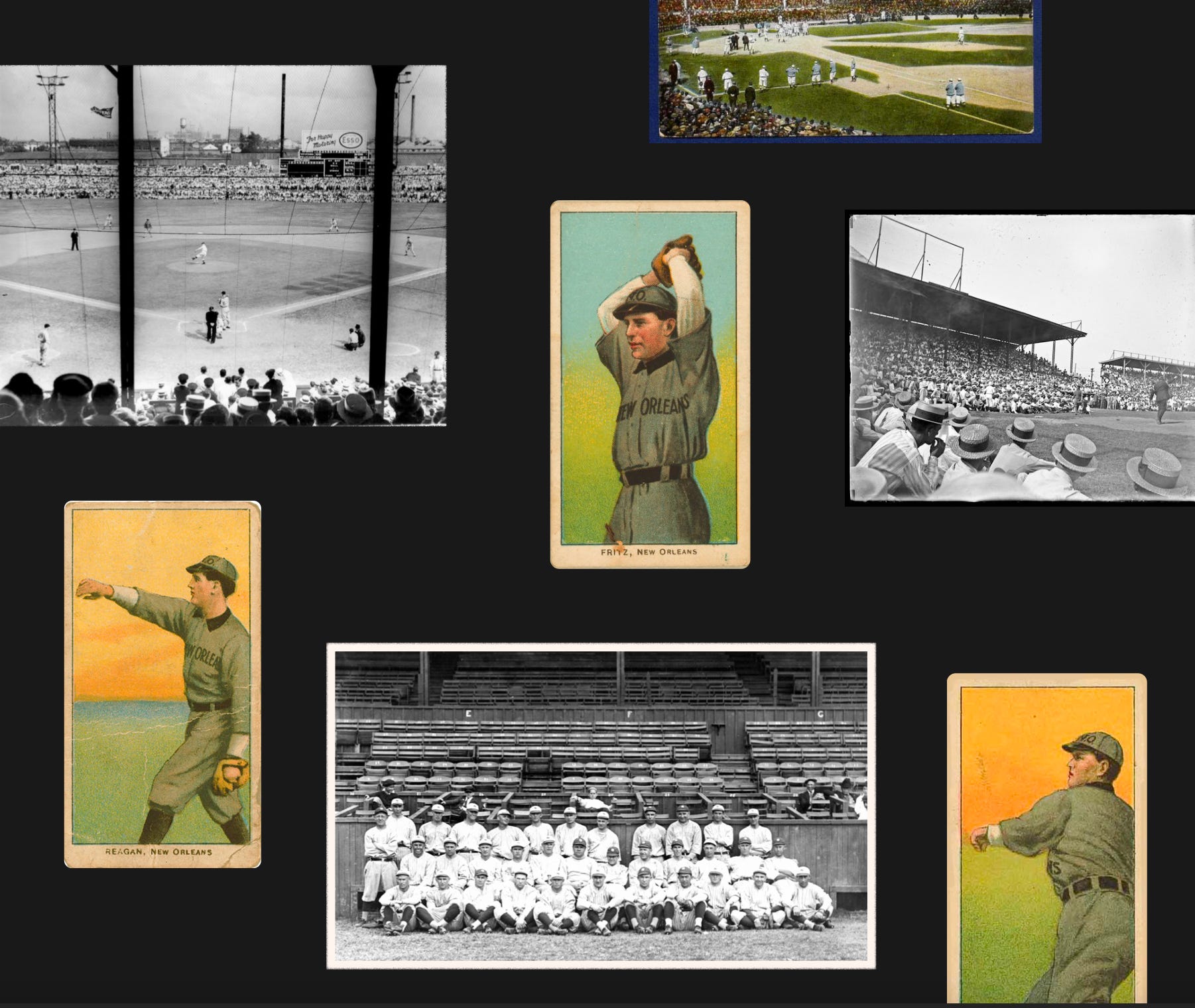
The New Orleans professional baseball team’s decision to rename itself the “Baby Cakes” in 2017 only formalized what had been obvious to locals for decades: baseball in New Orleans was dead. The name was an obvious imposter, just like the team itself: a Denver transplant that competed in the Pacific Coast League, was owned by a Rhode Islander and did not actually play in New Orleans but its suburbs. “Baby Cakes” seemed to allude to king cakes—the sugar-lacquered, Mardi-Gras-float-sized strudel, ubiquitous during Carnival season, concealing a buried plastic baby Jesus—though no New Orleanian had ever used that term to describe them. Less than three years later, despite a promise of free lifetime attendance to children born in 2017, game-day promotions of Fats Domino bobbleheads and the debased enticements of Boudreaux, the team’s orange-bucktoothed swamprat mascot, the death certificate was notarized. The team moved to Wichita.
It was the final indignity in a slow collapse that had begun many decades earlier—87 years, to be precise. During that span, a city that had once been crucial to the development of America’s pastime forgot about the sport it had helped to create and popularize. Long before any living New Orleanian was born—and a century before the founding of the Saints and the construction of the city’s preeminent house of worship, the Superdome—New Orleans was a baseball town. Between the mid-19th century and January 8, 1930, the city was the baseball hub of the South and the source of some of the game’s greatest players, rituals and peculiarities.
New Orleans could claim direct lineages to many of baseball’s stick-and-ball ancestors. The French balle empoisonée (“poisoned ball”), Britain’s stoolball and cricket and New England’s townball were popular in New Orleans before baseball’s ascendance. S. Derby Gisclair, a retired investment management consultant who has written two charmingly obsessive books about the history of baseball in New Orleans, notes that by the 1860s, at least 15 New Orleanian teams had joined the game’s first governing body, the National Association of Base Ball Players—more than any other southern city. (Chicago, by comparison, claimed only four teams.) The Louisiana Base Ball Association was one of the nation’s first organized leagues, and the local climate encouraged innovations that would be universally adopted: spring training (Cap Anson’s Chicago White Stockings began the tradition during the preseason of 1870), rain tarps and the raincheck. During storms, teams huddled beneath the branches of live oaks.
The first public mention of baseball in New Orleans came on July 29, 1859, when the Daily Picayune announced that the Louisiana Base Ball Club, “composed of a goodly number of our young men,” would play a “manly” game amongst themselves. But that notice, which only appeared because the club had invited a reporter from the Daily Picayune to a practice, suggested that the sport had a much longer history in the city: “We saw some of their play last week and felt ‘the old time come o’er us,’ as we renewed the recollections of many a well contested game in years gone by.” The paper’s recap was the first account of a baseball game played in the South (final score: 78-21).
During the following decade, by Gisclair’s count, 44 amateur clubs were active in New Orleans; by 1879, 228; during the 1880s, 699. Seemingly every organized body of people in the city formed a baseball club: religious orders, neighborhoods, streets, professions. The Screw Guzzles and Red Hots were firemen, Western Union telegraphers had the Morse Nine, the postmen formed the Ubiquitous Club, the Young Men’s Gymnastics Club fielded the Flip Flaps and Somersaults and Wintersaults and newspapermen, including perhaps the one who felt “the old time come o’er” him, played for the Items, Times and Picayunes. There were nearly as many leagues as teams and nearly as many playing fields as leagues. Women played (the Lasses, the Female Base Ball Club, the Gangers), as did children (the Hard Hitters, the Summer Gang, the Rough On Rats Base Ball Club). There were many Black teams with large followings, led by the perennial champion Pickwicks, composed of employees of the namesake social club. Occasionally, the Black teams played against white ones before large, paying crowds, though not the White League Base Ball Club or the Ku-Klux Base Ball Club.
Professional teams began visiting New Orleans in 1869, when the barnstorming New York Mutuals beat the local champion (the game was tied until the Mutuals rallied for seven in the ninth). It was not until 1887, however, that boosters raised enough money to launch the city’s first professional franchise. In 1889, the New Orleans Pelicans won their debut against the Mobile Swamp Angels, 5-2, before 5,000 fans at Sportsman’s Park, a ballpark built at the cemetery end of Canal Street. “It is not claimed that New Orleans has a team that will easily walk away with the Southern Championship,” reported the Daily Picayune, but the Pelicans did end up walking away with the Southern League championship on their first try, besting the Charleston Seagulls. Though the Pelicans would win another two pennants before century’s end, the team would not reach its ferocious zenith—enjoying one of the greatest runs in baseball history— until it came under the sagacious leadership of the man known to those who loved him as “Heinie.”
…
I sing of Alexander Julius Heinemann, sad and brave, whose warmest heart recoiled at the isolation of fortune! Sweet Heinie, who sought fellowship and love in pennants and was rewarded with desolation. How did he violate the will of the American Game? What was his offense? Why should a man beloved for his piety and grace suffer such endless hardship? Can there be so much anger in the hearts of the baseball gods?
He was a first-generation New Orleanian, a German Jew: his father, Meyer Heinemann, had sailed from Hanover in the 1850s and opened a wholesale shoe business on Canal Street. “More so perhaps than in most other American-Jewish communities,” wrote sociologist Leonard Reissman (The Jewish Journal of Sociology, July 1964), “New Orleans appears to give substance to the fears of benign assimilation that have always dominated Jewish history.” The New Orleanian Jewry’s assimilative urgency tended to manifest in a frenzy of civic boosterism, and Meyer Heinemann did his part. He served as grand marshal of the Volunteer Fire Company, joined the board of the Touro Infirmary and enlisted in the Confederate Army, fighting at Appomattox. But Meyer would be outdone by his first-born child, who learned that there was one thing even more American than war: baseball.
Alexander tried desperately to fit in. He was not a high achiever, charismatic, or physically attractive: as a young man, he was a runner-up in a contest for the “Ugliest Man in New Orleans.” He was a maniacally hard worker, however, with a minor genius for marketing, and he strove tirelessly to enter the New Orleans gentry. In his 20s he accumulated a small fortune peddling salt, syrup, olive oil, vinegar, chewing gum and anything else he could move for a profit. He rose to vice president of a local advertising firm and opened New Orleans’s first movie theater at the corner of Canal and St. Charles, where he projected moving images of a train and a bull fight. At 14 he began roasting peanuts on the grandstand at Pelicans games, enlisting as his cashier a trained monkey named Henry.
Heinemann was still in his early 20s when he entered baseball management—not of the Pelicans, at first, but as president of the six-team Mercantile League, composed of employees of Canal Street’s six largest department stores (most if not all of them Jewish-owned, and customers of Meyer’s Canal Street shoe business). To draw fans to Sunday morning games, he offered complimentary cigarettes to every man in attendance; joss sticks and other mosquito repellents during the 1905 yellow fever outbreak; free admission and all-you-can-eat peanuts to boys under 15 and for women, free admission and a box of chocolate cream (which, after consumption, doubled as a handkerchief case) plus a dedicated seating section where they would be attended scrupulously by “a committee of gentlemen.” But for all his success at winning the attention of strangers, Heinemann struggled to form close relationships. He never married. He lived alone.
Even as he continued to sell peanuts, popcorn and soda on the grandstand, Heinemann led an investment group that bought the Pelicans in 1906. He did not at first assume the title of team owner, choosing instead to act as the Pelicans’ public spokesman and to manage its finances. The sale was a surprising development at the time—the previous owner, a financier from New York, had been credited with saving the franchise, transforming it from a money-losing under-performer to a perpetual contender. During the previous season, the Pelicans had dominated their new league, the Southern Association, winning the championship and selling 300,000 tickets. The 1900 census reported New Orleans’s population as 287,104.
Heinemann worked hard to ingratiate himself with the fans. After a rain out, he stood outside the ballpark handing out refunds, in proud defiance of the league’s raincheck policy. He convinced the Cincinnati Reds to visit for two spring training games and worked the gate himself, introducing himself to each ticket holder. And he set about constructing what he pledged would be a new “modern, up to date” ballpark, the first of two he would build on South Carrollton Avenue in what is today Mid-City (the second stadium would be named, by popular demand, Heinemann Park). He soon became one of the city’s most celebrated philanthropists, organizing public campaigns for Charity and Touro hospitals, the Working Girls’ Outing Association, the Young Men’s Christian Association, the Young Men’s Hebrew Club, the Jewish Orphans’ Home, a shelter for homeless newsboys, a fund for new playgrounds and fresh milk for poor babies. He donated a pair of monkeys, Buster Brown and Mary Jane, to a yellow fever fundraiser. Though Henry, his old assistant, was fired from his job as peanut salesman after customers figured out that he would accept trouser buttons instead of pennies, Henry continued to live at the ballpark, serving as an informal team mascot—until he bit the groundskeeper.
Within a few years, the Pelicans were outselling every baseball team in the South. So many people bought tickets for opening day that the mayor declared it a city holiday. Heinemann posted a sign outside the stadium that called it the largest ballpark in the United States—a blatant lie, but one accepted in spirit, if not in fact. Heinemann was named chairman of the board of trustees of the Southern Association, overseeing its finances. The papers doted on him, calling him “the moneyed man.” He soon bought out the Pelicans’ other minority owners and was rich enough that he could have bought out every other team in the league as well, had he desired. He extended his generosity to his fans, proclaiming that a soda would never cost more than five cents at his ballpark—a move that would cost him tens of thousands of dollars. In the rare stretches when the team struggled, Heinemann served as the team’s unofficial heel, gallivanting about the stands in an old alpaca coat, seersucker pants and a battered straw hat trimmed with a bowtied black ribbon, inviting fans to jeer him for failing to field a better team.
The Pelicans were his life. “There’s no game like baseball,” he would repeat, over and over, to himself or to anyone who would listen. He traveled with the team on the road, took adulatory portraits of his players in formal dress (photography was an amateur passion), and worked long hours in the office he had built into his stadium’s grandstand. On off-days and holidays, he was often the only one in the park. He arrived at four in the morning, fed the monkey and the stray cats and stayed late. When colleagues stopped by the ballpark at night, they inevitably found Heinemann pacing his office in the dark, or walking, ghostlike, through the grandstand, lost to obscure meditations.
…
What consumed him? What private tremors haunted him? There was always a lot of business to negotiate: financing for a new ballpark, charity fundraisers, marketing schemes, personal investments, plans for a new regional league, player deals. But a deeper undertow pulled him. A friend called him “the most misunderstood man in the city of New Orleans.” The public Heinemann—exuberant, indefatigable, capering—was, in the darkness of his ballpark sanctum, sensitive to perceived slights and prone to panic attacks. He endured persistent spells of melancholy. On the wall of his office, he had posted a sign with his personal credo: “My Daily Prayer— Please Keep My Nose Out of Other Peoples’ Business.” It was a joke, sort of. His friends, in any case, kept a respectful distance from his own business—both his professional machinations and his inner torments.
Led by 22-year-old Shoeless Joe Jackson, the Pelicans won their second Southern Association championship in 1910. Although Jackson graduated to the big leagues after the season, the Pels repeated as champions the following year. Heinemann and his managers were shrewd evaluators of talent, identifying stars before the majors nabbed them, including future Hall-of-Famer Joe Sewell, the toughest man to strike out in baseball history. Even more impressive was the reclamation of future Hall-of-Famer Dazzy Vance, who had struggled through an injury-plagued decade in the minor leagues before Heinemann signed him. The Pelicans’ manager, Johnny Dobbs, thought to give Vance an extra, fourth day of rest between starts, cured him of his tired arm and revived his career. Vance was signed by the Brooklyn Dodgers the following year and led the majors in strikeouts for the next seven seasons.
During the 24 years that Heinemann led the team, the Pelicans won the pennant seven times and finished with a winning record every year but two. Even in losing seasons, the Pelicans finished in the top half of the league. The team’s overall winning percentage during that period was a playoff-caliber .572—a record, at least according to the Times-Picayune, “unsurpassed by any professional team in the country in either major or minor leagues.” The Pelicans were one of the most profitable minor league franchises in the country. It was not enough.
As Heinemann entered his 50s, he grew increasingly despondent. He suffered severe attacks of rheumatism and aged rapidly. He lost $300,000 in the crash of 1929, the equivalent of about $5 million in today’s dollars, though he retained an even larger share of his fortune. His friends did not think he was particularly worried about his own losses. He was destroyed, however, by the knowledge that his investment advice had lost his friends money. He grew convinced that they were turning on him. He repeatedly asked if they were mad with him, or if they would abandon him. He wondered whether they had even been his friends in the first place. “He brooded constantly,” said one, “because he was lonely.”
In mid-December of 1929, he sent the Pelicans’ team secretary to buy him a .38 caliber revolver. He asked various employees how to shoot it. He asked whether the sound of a gunshot in his office would be heard downstairs in the grandstand. He was told it probably would, but he wanted to be certain, so he fired a shot into his office wall and another into a stove next to his desk. He claimed that he was afraid of robbers. He also asked whether a bullet fired at close range would pass clear through his head. Heinemann may have had a few true friends, but if so, he didn’t confide in them about his plans, or the news of his office shooting matches didn’t reach them. Or they did nothing.
On the first Saturday afternoon of 1930, the Pelicans’ chief groundskeeper, Eddie Pohlmann, found his boss sitting at his desk with the revolver in hand. Heinemann, upon noticing Pohlmann, stuck the gun in his mouth.
“What would happen if I pulled the trigger?”
“You would blow your head off,” replied Pohlmann with a nervous laugh.
Three days later, Heinemann was unanimously re-elected team president. He gave his usual optimistic speech. “We have been 24 years in the first division,” he said, “and want to celebrate the quarter century by winning the pennant.”
Two days after that, Pohlmann and an assistant were trimming the field in the late afternoon when he observed Heinemann standing at the top of the grandstand, staring out at the diamond, “as if watching the ghost teams of his memory.” He had just turned 53. 15 minutes later came the sound of a muffled explosion.
“Wonder if it came from up in the office,” said Pohlmann’s assistant.
Pohlmann found Heinemann lying face-up on the floor of the hallway. He lay beside a rattan couch on which there rested his folded coat and vest. His hand still clutched the revolver. Blood streamed from his mouth. A few feet away stood the trophy room displaying Heinemann’s collection of autographed bats, gloves and baseballs.
“He was one of the best fellows that ever lived,” said Jake Atz, a long-tenured Pelican who was among the first to arrive at the scene, “but nobody just understood him.”
…
The Pelicans survived their owner’s death but lost their identity. Heinemann Park was renamed Pelican Stadium. Heinemann’s shares were bought by the millionaire owner of the Cleveland Indians, who turned the Pelicans into Cleveland’s minor league affiliate. In the following decades, the affiliation shifted every few years, the team serving as a way station for the St. Louis Cardinals, the Brooklyn Dodgers, the Boston Red Sox, the Pittsburgh Pirates and the New York Yankees. 17 men managed the Pelicans in 19 years. Pelican Stadium’s Black tenants, most prominently the New Orleans Caulfield Ads and the New Orleans Black Pelicans, continued playing into the 1950s—the Southern Association, unique among the minor leagues, refused to allow Black players until 1961, when the league disbanded rather than integrate—but failed to gain substantial followings.
Only 941 people witnessed the final game at the stadium Heinemann built, a number that would have been much smaller had it not been for a final, Heinemann-esque promotion: the promise of a Shetland pony, complete with saddle, to a child in attendance. After the 1957 season, Pelican Stadium was demolished, replaced by the world’s largest motor hotel. Two years later, the Pelicans moved to Little Rock and were renamed the Travelers. New Orleans became the largest American city without a professional baseball team.
Minor league baseball would return in 1977, when a team named the Pelicans served as the Cardinals’ Triple-A affiliate, though by then, the city’s allegiances were clear: these Pelicans played at the Superdome, the gridiron brightly visible beneath the thin carpet of Astroturf used for the baseball diamond. The Pelicans finished in last place and molted into the Springfield, Illinois Redbirds the following season. New Orleans failed in a bid for a major league franchise in the late 1970s and did not host professional baseball again until 1993, when the Denver Zephyrs, a Milwaukee Brewers affiliate, moved to town. After renting the University of New Orleans’s ballpark for three seasons, the franchise moved outside of city limits.
Today, a historical marker identifies the site of Heinemann Park. The motor hotel has become a dreary apartment complex, fronted by a semi-demolished parking lot and a shuttered drive-through fried chicken stand. The New Orleans Pelicans are a basketball team—though for how much longer, none can say (the team’s lease expires in 2024). Heinemann lies a couple of rows from his parents at the Hebrew Rest Cemetery. The Jewish population of New Orleans, by best estimates, has increased since Heinemann’s death—from about 9,000 to 12,000—though you would not know it, after nine more decades of “benign assimilation.” Without Heinemann’s obsession to sustain it, New Orleans lost interest in baseball. Would baseball have thrived, in the first place, without him? Was it even baseball that New Orleans loved, or Heinie? In the end, the indelible image of New Orleans baseball is not any Southern League championship or future Hall-of-Famer or vanished ballpark, but Alexander Heinemann himself, wandering the grandstand in his straw hat, a ghost communing with his ghosts.
NATHANIEL RICH is the author of the novels Odds Against Tomorrow and King Zeno, set in New Orleans in 1918; and two works of nonfiction, Second Nature and Losing Earth. He is a writer-at-large for The New York Times Magazine.