

Stranger’s Guide explores how politics, power and culture shape daily life across the globe. We believe that local writers, journalists and thinkers are best equipped to explain their political and cultural realities and we publish stories that ask us to listen to the complexities of the world.
Weekly Long Read is for everyone but it’s made possible by our paid subscribers. Thanks to those who support our work, and if you’re not yet a paid subscriber, today is the perfect day to join!
Vietnam United
by Gabriel Tan
Stranger’s Guide: Vietnam
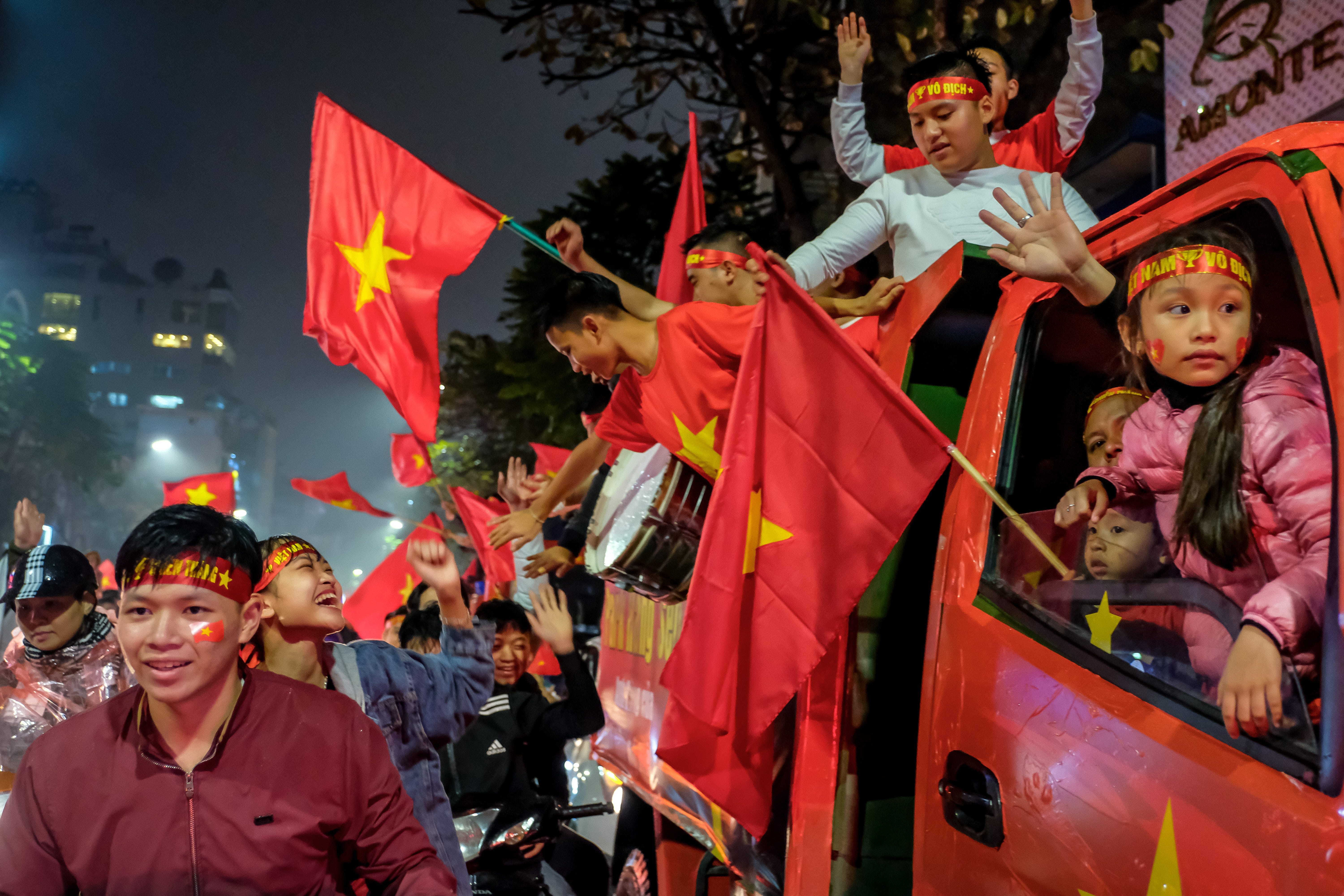
The evenings are never quiet in Vietnam’s two most bustling cities, but on a 2018 night, the cacophony of motorbike horns and whooping voices was unusually deafening. From Hanoi to Hồ Chí Minh City, thousands waved flags and pennants while riding through the streets. An endless sea of red peppered with yellow stars, which combine to make the Vietnam flag.
This is Đi bão, or “to go and storm.” Storm the streets, that is. It’s a scene that would hardly look out of place were it in celebration of a national revolution. But, in the few years preceding the pandemic, this sort of patriotic, boisterous display has come alive when the Vietnamese national football team is in action. And given what the sport means to a nation of nearly 99 million—the world’s 15th-most populous country—perhaps what their footballers have achieved over the past four years could be deemed nothing short of revolutionary.
THE ROAD TO QATAR (OR NOT)
The most obvious milestone in Vietnam’s fast-evolving football program is their campaign for the 2022 FIFA World Cup. For the first time ever, Vietnam reached the third and final round of Asian qualifiers, the last stop before the globe’s biggest football event, to be held later this year in Qatar.
Granted, odds are that the club will ultimately come up short in its quest to play in the prestigious tournament. At the time of writing, the Vietnamese were at the bottom of their group, having lost the first six games of Round Three play, and while advancement to the Qatar tournament isn’t mathematically impossible, it’s highly improbable.
Not that they’ve really lost at all. As the lowest-ranked team in their group, the odds were never in Vietnam’s favor. Especially considering they were coming up against four of Asia’s traditional heavyweights—Japan, Saudi Arabia, Australia and China—national teams who combine for 17 previous World Cup appearances. There have been 21 of the quadrennial tournaments since 1930.
Yet the Vietnamese have given these giants a run for their money. While one-sided thrashings are a frequent occurrence in the sometimes lopsided field of Asian football (the previous round of Asian World Cup qualifiers saw Iran beat Cambodia 14-0), none of Vietnam’s defeats have been by more than two goals. Expected to be put to the sword by the physically and technically superior Japanese and Australians, Vietnam lost their meetings against those teams with close scores of 1-0 in each. And they almost held the Chinese to a 2-2 draw, but for a heartbreaking third Chinese goal, which found the net in the fifth minute of added time.
The lack of victories might have meant there was no opportunity for Đi bão—probably a good thing, too, with COVID-19. But, even with pandemic restrictions reducing the number of spectators allowed onto the grounds, an impressive 20,000 fans returned to Hanoi’s Mỹ Đình National Stadium in November’s two matches against Japan and Saudi Arabia.
FOOTBALL COMES TO SOUTHEAST ASIA
To understand why football means so much to the people of Vietnam, it is perhaps useful to take a look back through the rich, but also at times volatile, history of a former French colony that was deeply affected by a civil war.
As is the case with almost all of Southeast Asia, the sport first entered the region through colonization. The British introduced the game to Singapore and Malaysia. Indonesia learned of it through the Dutch and will go down in history as the first Asian nation to feature at the World Cup. They appeared in 1938, as the Dutch East Indies. (The Dutch East Indies remain the only Southeast Asian team to ever play at the tournament.)
In Vietnam’s case, football first reached its shores in the late 1800s when the region was colonized as part of French Indochina. The game started in the southern region of Cochinchina, spread up to Annam in the center of the country, and reached the northern region of Tonkin.
Although official records from that era are understandably hard to come by, the first local competitions are believed to have taken place as early as 1907. These were hardly the highly competitive, gladiatorial battles that now define professional sports, but instead were more casual, recreational “contests” with little more than bragging rights on offer. While it was the French colonists who got the ball rolling, it did not take long for the adopted game to grow in popularity among Vietnam’s native-born athletes. But the national and international strife that was soon to follow would have lasting implications on every aspect of Vietnamese life, including the nation’s footballing history.
World War II saw the Japanese occupation of Indochina, and the 1945 Allied Forces victory created a local vacuum in power, which the nationalist Việt Minh group—headed by Hồ Chí Minh—viewed as an opportunity to declare independence. The French refused to relinquish their colonial claim, which led to the First Indochina War. The Việt Minh emerged victorious in 1954, but the division of the country as per the Geneva Accords would only lead to more conflict. The civil war—known around the globe as the Vietnam War—began in 1955 and would last for nearly two decades.
With the country divided into two, national teams formed on both sides of the 17th parallel. South Vietnam would compete internationally and were featured in the first two AFC Asian Cups in 1956 and 1960 as the qualifiers from the confederation’s Central Zone, which encompassed Southeast Asia at the time. (Effectively, they were the best team in the region.) North Vietnam did not join FIFA, football’s international governing body. Operating outside of this system, they played a mere 25 matches across a 14-year spell, largely against teams from fellow Communist states, for seven wins, three draws and 15 losses. Given none of these were competitive matches, they were of little significance.
REUNIFICATION AND REGENERATION
With the reunification of Vietnam in 1975 came the rebirth of a football team under a single national identity, but things were tricky initially. An important early milestone on this path to merging the clubs—and the nation—was the reunification game that took place on November 6, 1976. It was a match between Northern interests, the CLB Tổng cục Đường sắt (TCDS), a team affiliated with the General Department of Railways, and Southern ones, represented by Saigon Port.
Scott Sommerville, a British national based in Hồ Chí Minh City, has done extensive research on the reunification game. In his feature for These Football Times, Sommerville wrote that some viewed the match as potentially “a show of Northern might against the fragile, weak and unorganised Saigon team.”
Le Buu, the General Director of the Sports Administration Department, even admitted to the propaganda at hand. He was quoted in Sommerville’s article as saying that the choice of TCDS to represent the North was to promote “a sense of unity” with players that “were seen as working class, equals.”
As Le Buu and other Community party leadership had hoped, TCDS would go on to win 2-0 in front of 40,000 spectators—a crowd that spilled over into the running track of the 25,000-capacity Thống Nhất Stadium. It must have been a surreal experience—players recounted the sound of distant gunfire and explosions from outside the arena.
The match was to be the start of a new chapter in Vietnamese football, as life in the now-unified country began to return to stability. Over the following decades, the national football program evolved, but importantly, the fan base changed, too. In time, the sport was allowed to thrive due to the passion of a new group of younger fans who did not have to endure the turmoil of the previous generation.
“I think the older generation, like my father, could not care as much about football,” said Hanoi-based Võ Minh Kha, who—having been born in 1981—grew up at a time when the country was just recovering from the war. “They had other things to worry about. My father just wanted to work hard in order to raise me. Sure, they watched [football], but I don’t think they were able to experience the emotions that my generation did as we followed the sport growing up.”
Vietnamese football was finding its feet again, slowly but surely. Its infrastructure and organization both needed to be reestablished after decades of neglect. It was 1991 when the Vietnamese made their long-awaited re-entrance on the international stage—under a single flag—with the Southeast Asian (SEA) Games, a regional multi-sport meet. Just two editions later, they brought home a silver medal. It was a generational awakening. “For me, and for millions of other kids at that time,” Minh Kha explained, “the national team was what started a love for football.”
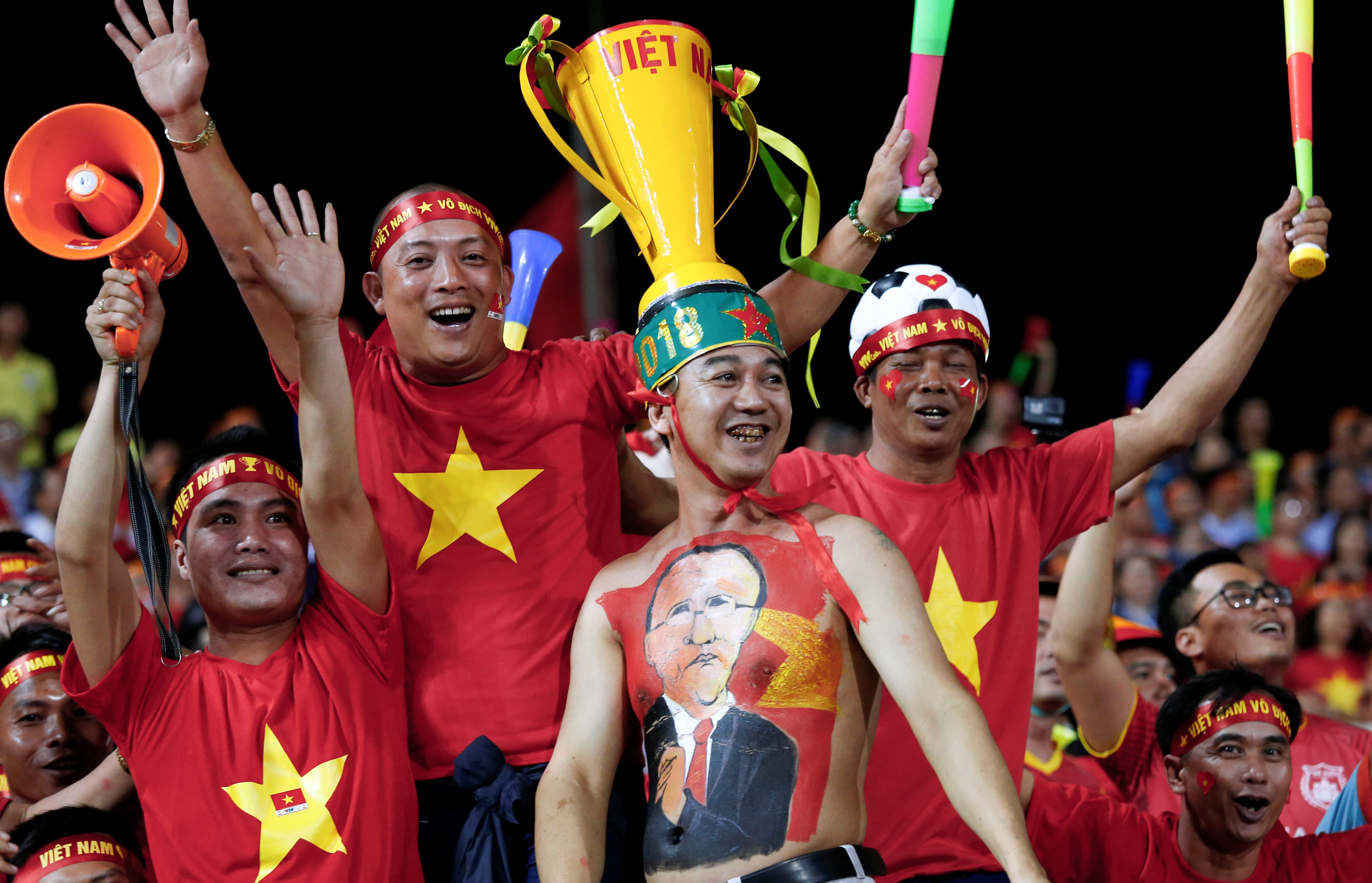
“As a child, the success of the national team at the 1995 SEA Games gave me a high unlike any other,” Minh Kha added, recalling the matches he watched as a young teen. “There was a sense of nationalistic pride. We have to remember that, during this time, Vietnam was still in a difficult place in terms of the economy.”
Indeed, this was a country that had to do much of its rebuilding without the support of the international community. While the conflict was over, the economy remained battered. Financial assistance, via the International Monetary Fund and the World Bank, was blocked through the 1980s, a period during which the country saw 400 percent inflation. Basic necessities such as food were subject to stamp rationing. The lights, at times, were literally out. The American trade embargo on Vietnam would only be lifted by President Bill Clinton in 1994.
Locals were in desperate need of a lift—one that could elevate or separate them from their trying daily lives—and sports offered that. Minh Kha said football “affected the cultural and spiritual aspects, as well. Apart from the odd memorial event or a historical anniversary, we didn’t have many chances to enjoy the emotions that football brought to us. Each match was like a festival for all.”
YEARS OF SUFFERING
That 1995 SEA Games silver could only buoy their supporters’ spirits for so long. The AFF Championship—Southeast Asia’s premier tournament—began in 1996, and with it, several regional rivalries really took off. Vietnam did not initially fare well with its neighbors. In the first two decades of the (mostly) biennial competition, Vietnam would only taste success once, in 2008.
It wasn’t for lack of talent. Lê Huỳnh Đức, who made his international debut in 1993, was the first bona fide star of Vietnamese football. Always wearing a steely gaze of determination on the pitch but ever ready to break into a warm smile off it, Huỳnh Đức established himself as one of the region’s most feared strikers. At a time when some of the football pitches in Southeast Asia resembled paddy fields, often so waterlogged during the monsoon seasons that they were nearly unplayable, Huỳnh Đức somehow made it look effortless, like he had the ball tied to his foot by a string. The sight of Huỳnh Đức sprinting to the crowd after firing an unstoppable shot into the back of the net became a common one. He was idolized by an entire generation of impressionable fans, fans who were crying out for a hero to lead them to footballing glory.
His high profile and beloved position would be surpassed by his successor—both in the striker position and star-player status—Lê Công Vinh, who made his debut for Vietnam in 2004, the same year Huỳnh Đức retired from international play. Exuding a roguish charm while also making headlines for being in a high-profile relationship with Vietnamese singer Thủy Tiên, Công Vinh appealed to a new era of fans. Fans in the early 2000s were newly exposed to pop culture and trends, and they became invested in the lives of their favorite footballers outside the stadium nearly as much as their on-field performance. These new fans were not only beginning to be able to afford the expensive cleats their favorites players endorsed, but they were also heading down to the barber each time they saw a new hairstyle sported by the same star. It was no longer just about football.
Of course, it did help that Công Vinh could play. With his decisive two-goal display in the 2008 AFF final, he would be the pivotal figure in Vietnam claiming their first-ever AFF crown, and he remains their all-time top scorer and appearance maker till this day.
While superstars like Huỳnh Đức and Công Vinh roused fans across the nation and could lay claim to being among the best in the entire region, Vietnam faced a major problem that was perpetually holding them back: there are still 11 players on the field at any given time, and the sort of generational talent these players espoused were just too few and far between to field a team truly capable of being competitive internationally. “During the lean times of the national team, there was some slightly less-feverish support, but attendances and interest was still piqued when it came to the ‘big’ games,” recalled Sommerville, who still counts the 2008 triumph as his fondest memory from Vietnamese football, as it was also his first experience of Đi bão—the now-frequent storming of the streets following a win.
THE START OF THE PARK HANG-SEO ERA
For all of Vietnam’s underachieving ways, fans could have been forgiven for not getting overly excited in 2017 when a new coach was appointed. “Park Hang-who?” was the common refrain.
In fairness, at first blush, Park Hang-seo wasn’t the most rousing pick: a diminutive, bespectacled Korean gentleman of 60, who, understandably, could not speak a word of the local language. And the inquests into his credentials all returned the same claim to fame, if it could even be called that: Park was the assistant to South Korea’s Dutch coach, Guus Hiddink, who famously led the team to a fourth-place finish at the 2002 World Cup—the first time a team not hailing from Europe or the Americas placed in the top four.
Despite the fact that Park had thereafter been handed the reins at several South Korean top-flight clubs, any significant success eluded him, which is perhaps why it was still his role as a second-in-command that he was best known for.
“Nonplussed” was how Sommerville described the initial reaction to the appointment. Hanoi-based journalist Lê Bảo Ngọc went even further. “No one believed he could succeed,” said Bao Ngoc. “He said he could bring the team into the world’s top 100 and was subject to a lot of skepticism from the public.” Personally, Bao Ngoc was ambivalent. “I thought this could be the next failure of Vietnamese football, but deep down, many of us hoped for something.”
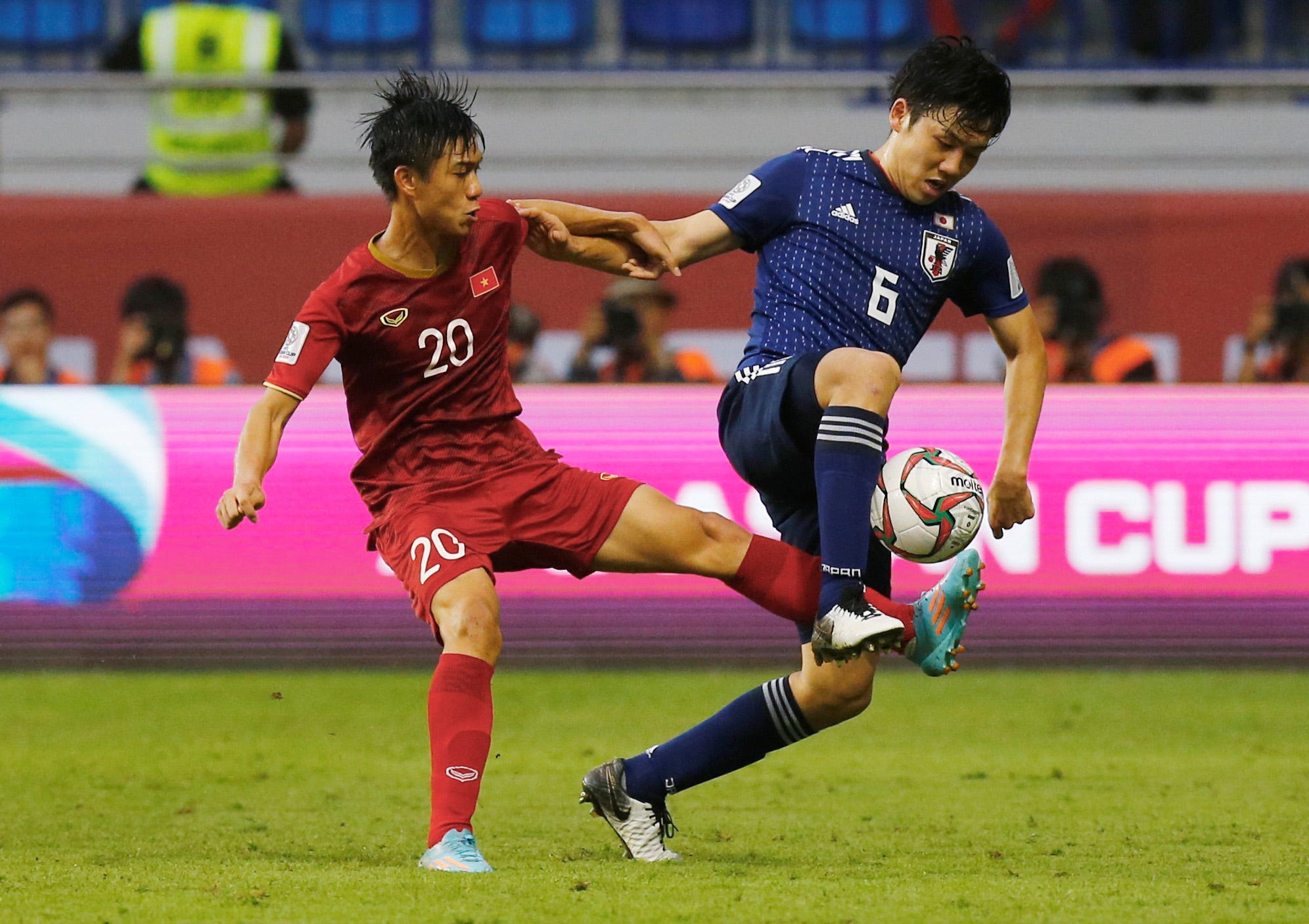
Four years on, that same diminutive, bespectacled South Korean man is celebrated across the country. Ironically for a man who was once viewed as an uninspiring sight, companies have come knocking with endorsement deals, and Park can be seen on billboards advocating everything from banks to a brand of noodles. At a moment when the world has been captivated by Korean culture, from Squid Game to BTS, it wouldn’t be preposterous to suggest that Park is the most well-loved Korean export for many Vietnamese.
IT TAKES A (YOUNG) VILLAGE
So how did Park become a national hero? He certainly put in the work—according to Bao Ngoc, “He is always focused and serious, ready to voice his opinion when needed.” Park did have to learn the best way to voice that opinion in Vietnam. Bao Ngoc said, “Many players revealed there were some difficulties working with Mr. Park at the start, but things became easier as cultural differences faded. [Now, he] understands Vietnamese culture and treats the players like his own children.”
It’s worth emphasizing that last word: children. Because, for all Park’s hard work and accomplishment, he has also been handed a lucky break: a generational anomaly of many talented players coming up all at once.
A golden generation. These things do happen in football from time to time. And it’s imperative to capitalize when it is your turn. Portugal infamously failed to achieve any notable success with the players that won back-to-back FIFA Youth Championships (now known as the Under-20 World Cup) between 1989 and 1991. At present, Belgium is still trying to win a trophy despite boasting some of the best young players in the world.
As for Vietnam, the jury is still out on how it happened. It could have been sheer good fortune as the stars decided to align for Vietnam, or they may have gotten it tremendously right for a period in their youth development and grassroots programs. One thing is for certain. This crop of players, who mostly grew up in the 2000s, would have found themselves in a far more stable Vietnam without the tribulations that came with rebuilding of a nation after 30 years of war, with a far more advanced footballing ecosystem to hone their early craft. And in a more modern society where they, as impressionable young boys, would have been able to watch the likes of Huỳnh Đức and Công Vinh on television and have idols to aspire toward. And where Huỳnh Đức and Công Vinh were let down in the past by flying high without enough support across the squad, this entire cast of talented prospects emerged at the same time Park embarked on his first major assignment: the 2018 Asian Football Confederation (AFC) U-23 Championship.
There was Nguyễn Quang Hải, the generational successor to Huỳnh Đức and Công Vinh. But this time, he was backed up by several others.
The inspirational captain and defender Quế Ngọc Hải, whose selfless ways were clear for all to see. (In 2016, he offered to play as a goalkeeper—the sport’s most-specialized position—in an AFF Championship semifinal, after the first-choice custodian had been sent off and the team had used all of their substitutions.) The tireless Nguyễn Trọng Hoàng, by no means the most talented footballer, makes up for whatever he lacks in skill with sheer endeavor. And the Moscow-born goalkeeper Đặng Văn Lâm, whose half-Russian heritage has blessed him with a hulking 1.88 meter stature, offers Vietnam a presence between the goalposts unlike any they have had before.
With many of the “golden generation” having come up through the developmental teams together, Park knew he had at his disposal a quantity of quality unlike any Vietnam had ever produced before. But Park was also savvy enough to understand they would still be underdogs coming up against traditional powerhouses at the AFC U-23s. So he set his side out to frustrate their opponents: defensively stable and risk-averse, but looking to hurt on the counterattack.
The Vietnam team would reach the final—a final that was delayed by snow that January 2018 afternoon in Changzhou. When the squall lightened and the teams took the wintry field, the Vietnamese players, usually drenched in sweat from the sweltering Mekong heat and humidity, were almost unrecognizable decked out in long sleeve undershirts and gloves. Uzbekistan had the lead until Quang Hải, having had to brush away enough snow on a blindingly white surface to create enough clean grass to place the ball down on for a free kick, proceeded to equalize for Vietnam with his wand of a left foot. But in the final minute of the contest, the Uzbeks would score again to win the tournament and break Vietnamese hearts.
While it was not to be, it was still a commendable achievement and one that would pave the way for more to follow. Seven months later, once again coming up against teams that were on paper far superior, Vietnam would finish fourth at the Asian Games, another Under-23 tournament. By the end of 2018, with the full senior team largely comprised of these young starlets, Park would lead Vietnam to a second AFF Championship title.
PROVING THEY CAN MATCH THE CONTINENT’S ELITE
By now, the sentiment surrounding Park had shifted drastically. But the targets were shifting as well: could he ensure Vietnam would start heading into future tournaments as genuine contenders rather than rank outsiders? Park only had to wait a fortnight for an opportunity to prove that the transformation was underway.
After the World Cup (in which, in 2018, a maximum of five Asian countries could qualify), the Asian Cup is the next biggest tournament for teams in the continent. As a unified country, Vietnam had only appeared at one previous edition prior to 2019, and that was by virtue of qualifying automatically as co-hosts.
This time around it was different. They had qualified by merit, and there was a sense of optimism that they might pull off an upset…until the draw pitted them against two former champions—Iraq and Iran—in their opening matches.
They were defeated but hardly humbled in those two games, and they still had a chance to qualify for the knockout stage with a win against Yemen. Another free kick awarded to them on the edge of the penalty box. Another effortless strike from Quang Hải’s left boot sent the ball arrowing into the top corner. Vietnam was up 1-0. A second goal followed, and Vietnam were through.
In the Round of 16, Vietnam faced a physically imposing Jordan outfit; the team seemed to stand, on average, at least a head taller than the Vietnam squad. (Two heads even, in the case of the bantam-sized Quang Hải, standing at just 1.68 meters.) But what he and his teammates lacked in size, they made up for in grit. With the teams still in a 1-1 stalemate after 120 minutes, it was the Vietnamese who held their nerve to prevail in the tie-breaking penalty shootout.
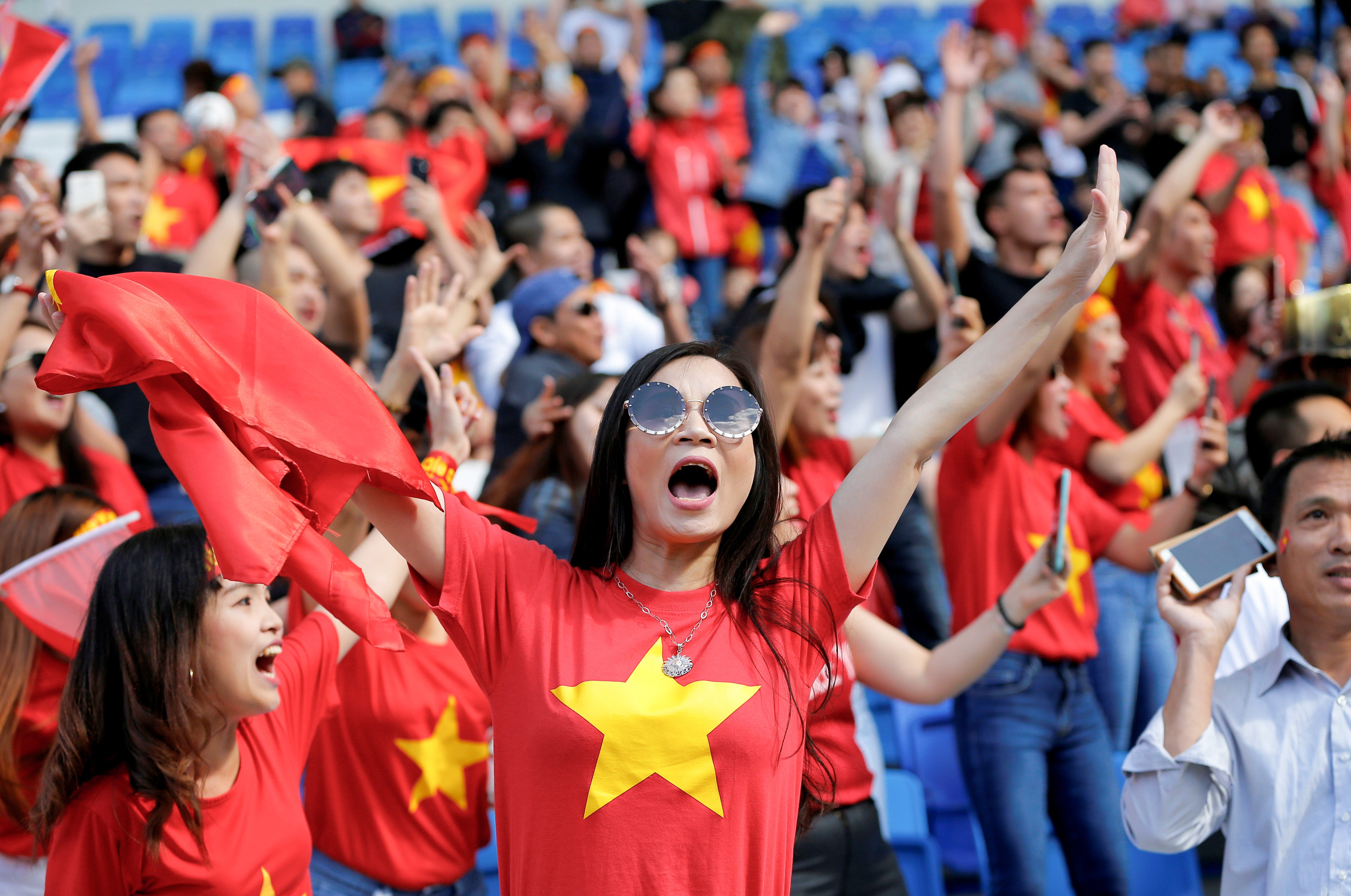
Ultimately, the quarterfinals would be as far as they would go. A 1-0 defeat to Japan, the Asian Cup’s record four-time champions, was nothing to be ashamed of. Park and his charges returned to Vietnam with a hero’s welcome. Quang Hải, like Huỳnh Đức and Công Vinh before him, was the new name on everyone’s lips. But unlike his luckless predecessors, there were many around him who were celebrated in equal measure.
A FUTURE NOT WITHOUT UNCERTAINTY
What is the the road ahead for Park and his squad? Their performance in round three of the recent World Cup qualifiers has had cynics questioning if the national team has gone as far as they can under Park. To some fans and followers, another important, unrealized marker of Vietnamese football success would be for Vietnamese athletes to thrive within the larger multinational market. Vietnam has yet to have a successful export player, even in Asia, let alone Europe. It’s not for lack of trying: several have played for stints in Japan, South Korea and the Netherlands, but they haven’t made much of a ripple.
There are several factors at work. The domestic club football scene is not the most well-run, which could be a factor as to why a prodigious talent like Quang Hải has yet to embark for greener pastures. “The local club scene is slowly getting better, but it’s still not in a good state,” Sommerville admitted, pointing out that the most meaningful player growth would happen if athletes were able to thrive abroad. “This needs to happen now.”
However, it’s not as easy as just packing a suitcase full of cleats. Sommerville also cites “restrictive, long-term contracts” that allow some clubs to “almost have an ‘ownership’ over players.” As if to further illustrate the influence that some of these powerful club owners exert, hardly anyone has openly identified the specifics of such draconian contracts, although many acknowledge they are in place.
The COVID-19 pandemic has not helped matters, with the 2021 campaign of the domestic V.League 1 cancelled after 12 games, meaning the entirety of Vietnam’s professional footballers missed out on more than half a year of regular action. While Vietnamese fans do not turn out in the same numbers for club matches as for when the national team is in action, they’ve missed V.League 1 all the same, and they have been starved of their regular fix of seeing their favorite players take the field.
WHY FOOTBALL MEANS SO MUCH TO THE VIETNAMESE
The national team’s supporters have been there every step of the way, but just like Vietnamese football itself, they are constantly evolving.
For all that Park has gotten right in his time in charge of Vietnam, he may have gotten one thing wrong. He once quipped, “Vietnamese people love football, but they love winning football matches more.” That could have rung true for the older generation, who desperately needed joy in their lives, who sought out any cause for celebration. But with Vietnam as a country having come a long way since the immediate post-war era, these are different times, with a new generation of fans who not only focus on the successes, but also embrace the experience for what it is worth.
This new mode of fandom was evident in the way those 20,000 fans flooded the Mỹ Đình National Stadium in November as football finally returned to Vietnam, despite Vietnam being without a win in the Round Three campaign. Vietnamese fans no longer need sports heroes to issue a strong statement of patriotism with their victories. Now, they simply want to see the children of the country playing their favorite sport.
Đi bão is truly a sight to behold. But as powerful an image as that sea of flag-bearing fans stretching from Hanoi to Hồ Chí Minh City was, so was encountering the enthused crowd in the Mỹ Đình National Stadium to support a team without a win. It is undeniable that Vietnam loves winning football matches. But today, they might just love football more.
GABRIEL TAN is a general editor for ESPN focusing on the Asian market. He was previously the digital lead for FOX Sports Asia and his work has taken him to a host of major events, including the 2018 FIFA World Cup.